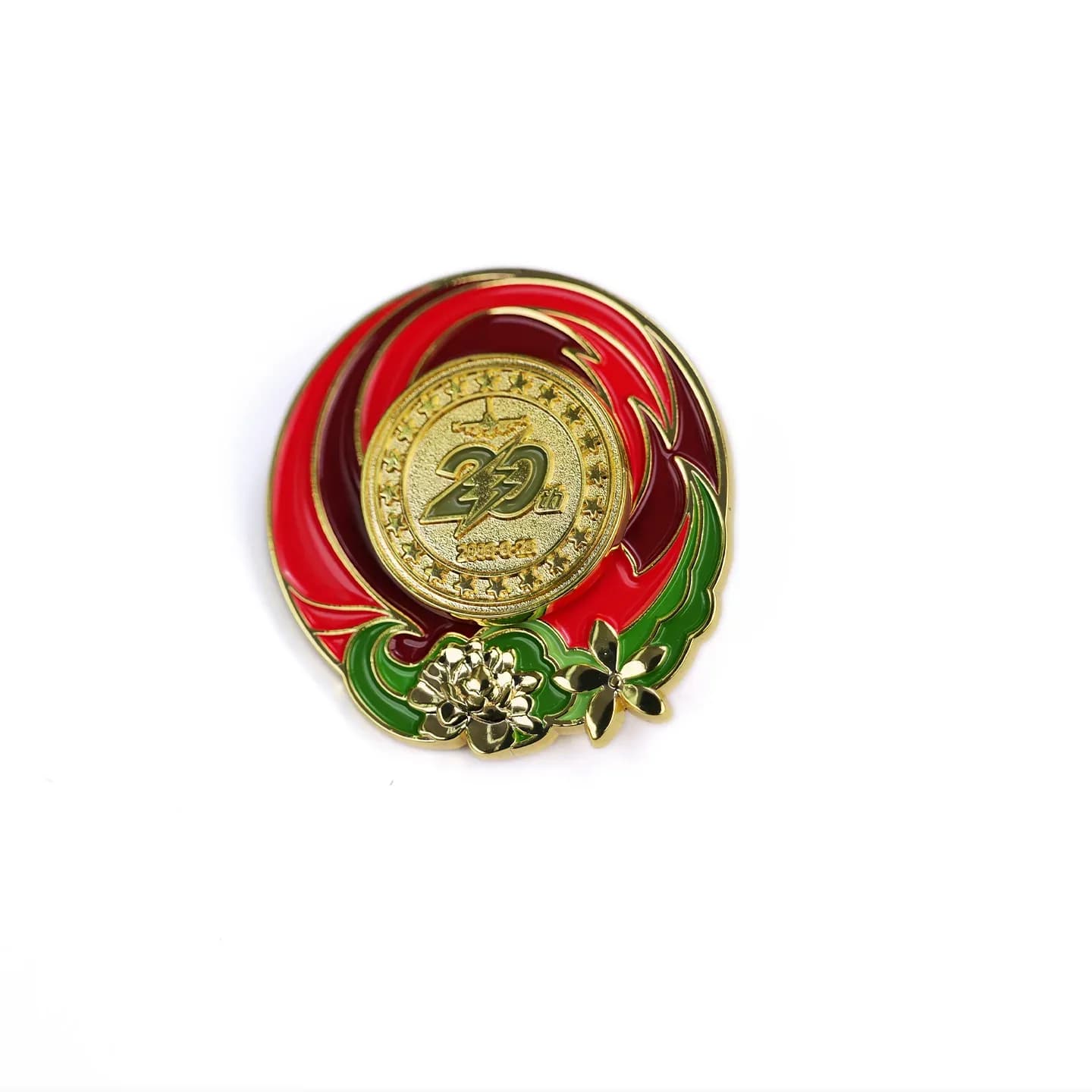
Yes. A company logo can be put on metal promotional products, and in most cases the logo is the reason the item exists. The more useful question is not whether it can be branded but how, because the method has to fit the metal, the shape of the piece, and how much detail your logo contains. A logo that works beautifully on a flat brass keyring may need rethinking on a curved bottle opener or a small charm with fine lines.
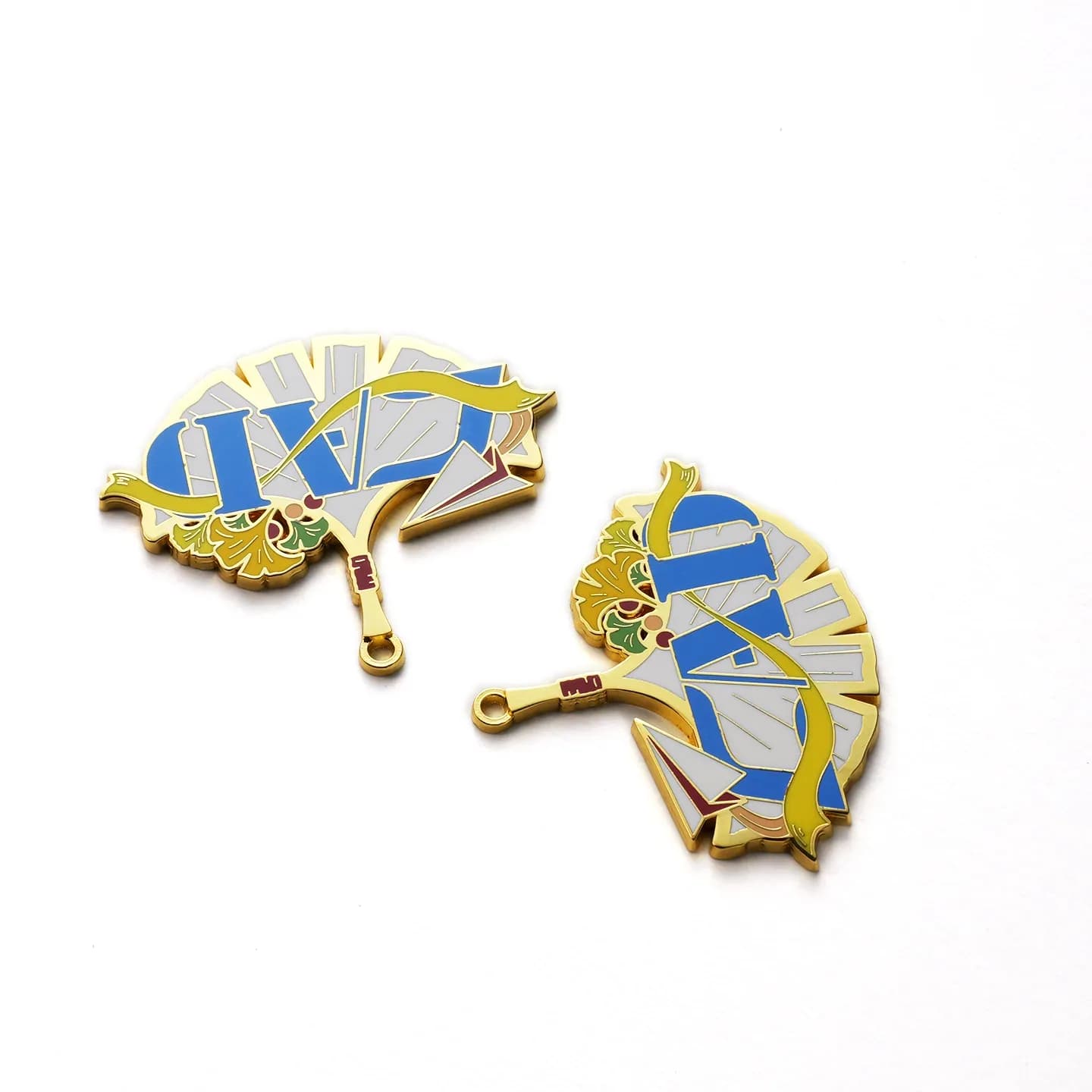
The common ways a logo goes onto metal are casting it into the piece, stamping or embossing it, printing it, laser engraving it, or applying it as an enamel or epoxy-filled area. Casting and stamping change the surface itself, so the logo becomes part of the object and will not rub off. Printing and pad printing sit on top of the surface and can reproduce several colors, but they are more exposed to wear. Laser engraving removes a thin layer of material or coating, leaving a mark in the metal's own tone. Enamel fill lets you build a colored logo into recessed areas, which is why it is common on badges and pins.
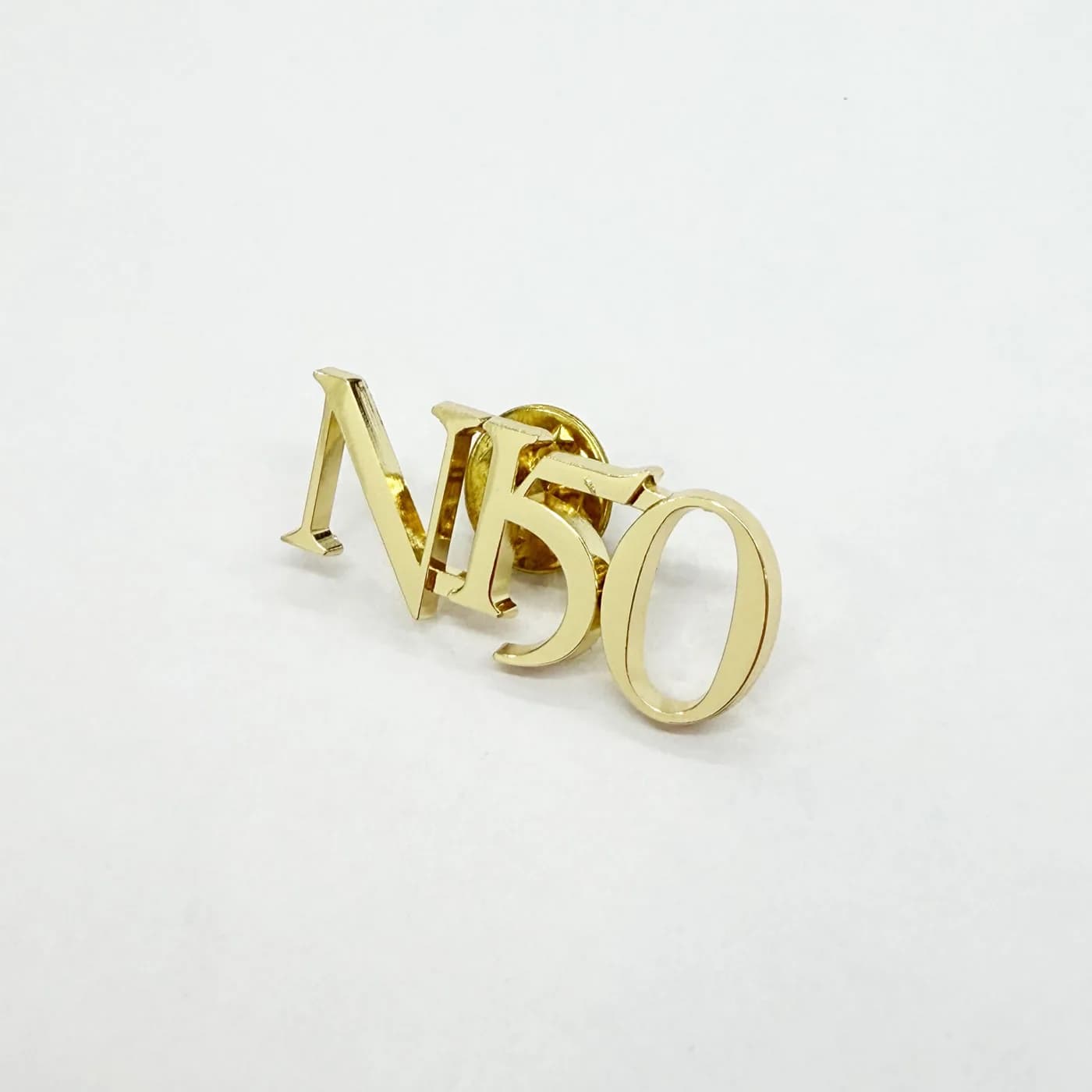
Which method makes sense depends first on the metal. Zinc alloy is cast easily and takes fine detail well, which is why it is widely used for logo-shaped pins and brooches. A zinc alloy openwork logo brooch, for example, is die-cast and electroplated so the logo outline itself becomes the shape of the piece rather than a mark printed on a blank. Iron and brass behave differently: iron is often stamped, while brass can be engraved or etched with good sharpness. If your logo has thin strokes, tight letter spacing, or very small text, the metal and method need to be chosen together, because some combinations simply cannot hold that level of detail at a small size.
Shape matters as much as material. Flat surfaces accept printing and engraving directly. Curved or irregular surfaces, such as the body of a mug-shaped item or a rounded charm, make pad printing and laser marking harder to keep even, and a cast or stamped logo may be the more reliable route. Very small items also limit how much logo you can fit; a 28 mm badge has room for a compact emblem and a short line of text, not a full address and slogan. It helps to think about the final size early, before artwork is finalized.
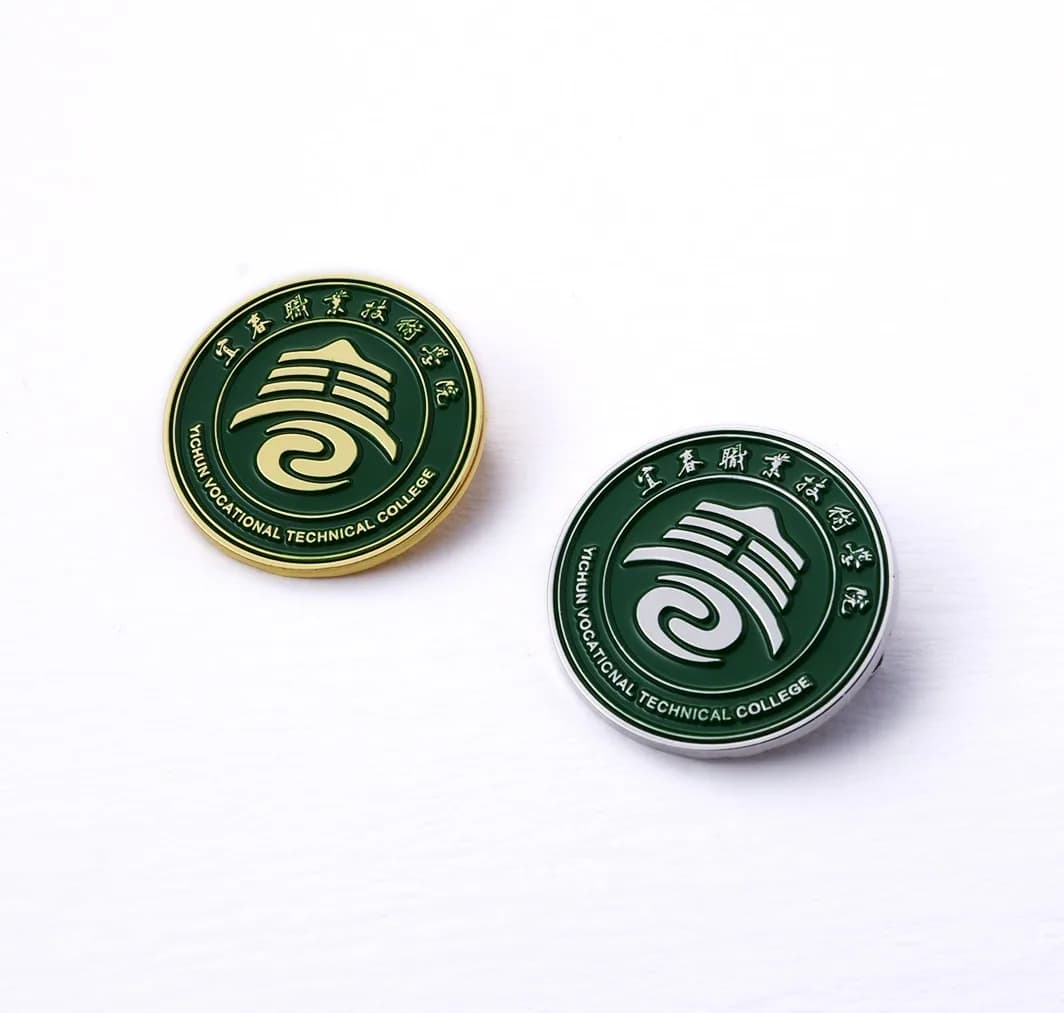
Color is the next decision. Metal items often look best when the logo uses the metal's own finish, such as raised polished lines against a matte background, or a two-tone gold and silver effect. If your brand relies on specific colors, enamel fill or printing can reproduce them, but each added color usually adds a step and cost. Soft enamel leaves the color slightly recessed; hard enamel is polished flat with the metal. Neither is automatically better; it is a question of whether you want a textured, classic look or a smooth, modern one.
Before production, settle a few practical points with your supplier. Ask which method they recommend for your specific metal and shape, and why. Send vector artwork rather than a screenshot or a low-resolution image, since engraving and casting need clean outlines. Confirm the smallest text size that will remain legible in the chosen method, and check whether your logo will be reproduced in one color or several. Ask to see a proof or a sample of the marking on the actual material, because a logo that reads well on screen can look very different once it is etched into metal or filled with enamel. A sample confirms how that one piece looks; it does not by itself guarantee that every unit in a larger run will match, so agree on what will be checked and how.
It is also worth deciding where the logo sits and whether the back of the item needs branding too. On a pin or brooch, the front carries the logo and the back carries the fitting, but a small stamped mark or engraved line on the reverse is possible if you want it. Packaging is a separate branding surface: a printed card or gift box can carry your company name and details even when the metal piece itself has limited space.
In short, metal promotional products are a good fit for company logos precisely because the marking can be permanent. The key is to match the method to the metal, the shape, and the level of detail in your logo, and to confirm those choices on a physical sample before committing to a run.