
In this article
Custom pins can be made in several ways, depending on the design, quantity, materials, and finish you want. You can make simple pins yourself, order them through an online platform, or work directly with a professional manufacturer.
If you're wondering how to make custom pins for your brand, business, event, or organization, the process involves more than putting a logo on a piece of metal. It requires choosing the right production method, developing the design, making a mold, approving a sample, and moving into bulk production.
There are also a few things that are easy to overlook when planning a custom pin order. The total quantity, the number of different designs, and the finishing standards can all affect the final cost. Based on our experience manufacturing custom metal products, we'll explain how the process works and what to consider before placing an order.
How Are Custom Pins Made?
There isn't just one way to make custom pins. The right approach depends on how many you need, how detailed the design is, and what kind of finished product you're looking for.
Generally, there are three ways to get custom pins made.
DIY Pin Making
You can make simple pins yourself using craft materials, ready-made pin blanks, or basic tools. This approach works well for small creative projects, handmade accessories, or personal use.
However, DIY methods have limitations when it comes to professional metal finishes, detailed designs, and consistent production.
Working with a Professional Manufacturer
A custom pin manufacturer can handle the production process, from mold making and metal forming to polishing, plating, coloring, and assembly.
This is a common choice for businesses, promotional product suppliers, corporate gift companies, and event organizers that need professional metal quality or larger quantities.
Using an Online Custom Pin Platform
Some online platforms allow you to submit a design, select product options, and place an order. They can make the ordering process more convenient, especially if you already know what you want.
However, the actual manufacturing is usually handled by a production supplier. The level of design support, customization, and communication can vary between platforms.
Should You Make Custom Pins Yourself or Work with a Manufacturer?
Both options have their place. The best choice depends on your project rather than simply which method is cheaper.
When Does DIY Pin Making Make Sense?
Making pins yourself may be a good option when:
- You only need a few simple pins.
- You enjoy handmade projects or want to experiment with different designs.
- You don't need complex metal structures or professional surface finishes.
- The pins are intended for personal use rather than commercial distribution.
For these projects, buying ready-made materials or using simple craft techniques may be more practical than commissioning custom metal production.
When Should You Work with a Professional Manufacturer?
Working with a manufacturer makes more sense when your project requires:
- Custom metal shapes, raised details, or three-dimensional designs.
- Professional finishes such as electroplating, enamel, or painted colors.
- Consistent product quality across a larger order.
- Custom molds and manufacturing processes that aren't practical to handle yourself.
- Production support from the initial concept through sampling and bulk manufacturing.
For example, a company developing branded lapel pins, a gift supplier preparing promotional merchandise, or an event organizer ordering commemorative pins will usually benefit from professional manufacturing.
When Is Factory Customization Not the Best Choice?
Professional manufacturing isn't necessarily the right solution for every project. There are two situations we come across quite often.
1. You only need a few pins
We sometimes hear from individual customers who want to make just a handful of custom pins. They may have a personal design, a favorite character, or an idea for a special gift.
The difficulty usually comes when they receive the quotation.
Custom metal pins generally require dedicated molds. Mold development creates an upfront cost, and that cost needs to be spread across the order quantity. The metal, forming, finishing, and assembly processes also contribute to the final price.
When you order several hundred or several thousand pins, the mold cost is distributed across more pieces. But if you only need a few, the cost per pin can become surprisingly high.
This is why traditional custom metal production may not be economical for someone who only wants three, five, or ten pins. Ready-made pin blanks, handmade products, or other production methods may be a better option.
2. Your total quantity is large, but every design is different
This is another situation that customers sometimes overlook.
Imagine you need 1,000 custom pins. At first, that sounds like a reasonable production quantity. But what if those 1,000 pins are made up of ten completely different designs, with only 100 pieces of each?
The production situation changes considerably.
Each different design may require its own mold. The artwork, product structure, and manufacturing requirements also need to be reviewed separately. In other words, the factory cannot always treat all 1,000 pieces as one production run.
For mold-based metal products, the quantity of each individual design matters, not just the total order quantity.
A project with 1,000 pins in one design is very different from a project with 1,000 pins divided across ten designs. The latter may involve more mold costs, more setup work, and smaller production quantities for each item.
This doesn't mean multiple designs cannot be manufactured. It means that each design needs to be evaluated separately to see whether the production cost makes sense.
3. Your budget or deadline doesn't match the production requirements
Custom metal manufacturing involves mold development, material processing, surface finishing, and quality inspection.
If the budget cannot cover these processes, or the deadline doesn't leave enough time for mold making, sampling, and bulk production, another production method may be more suitable.
The important thing is to choose a method that fits your actual needs. A professional factory is a good choice when you need customized metal products and reliable bulk production, but it isn't necessary for every small project.
How to Get Custom Pins Made: From Idea to Sample
Once you've decided to work with a manufacturer, the project moves through several stages. Understanding these steps helps you know what to expect before production begins.
Step 1: Define Your Product Requirements
Start by deciding what kind of pin you want to make.
Some basic details include:
- The intended use, such as branding, events, gifts, or retail merchandise.
- The approximate size and shape.
- The expected quantity of each design.
- The overall appearance and finish you want.
- Your target budget.
One detail worth emphasizing is the quantity of each design. If your order includes several different pins, let the manufacturer know how many you need for each one. This makes it easier to evaluate mold costs and production arrangements.
Step 2: Develop and Confirm the Design
The design needs to be suitable for the intended manufacturing process.
At this stage, the manufacturer reviews the artwork, product structure, dimensions, and details. If necessary, adjustments are made to ensure the design can be produced properly in metal.
For customers who don't have a finished design, some manufacturers can also provide original design services and help develop the artwork from an initial idea.
The goal is to confirm what the finished pin should look like before moving forward.
Step 3: Choose the Manufacturing Process
Different designs require different production methods.
A relatively flat design with clear outlines may be suitable for stamping, while a pin with raised details or a three-dimensional shape may require die casting.
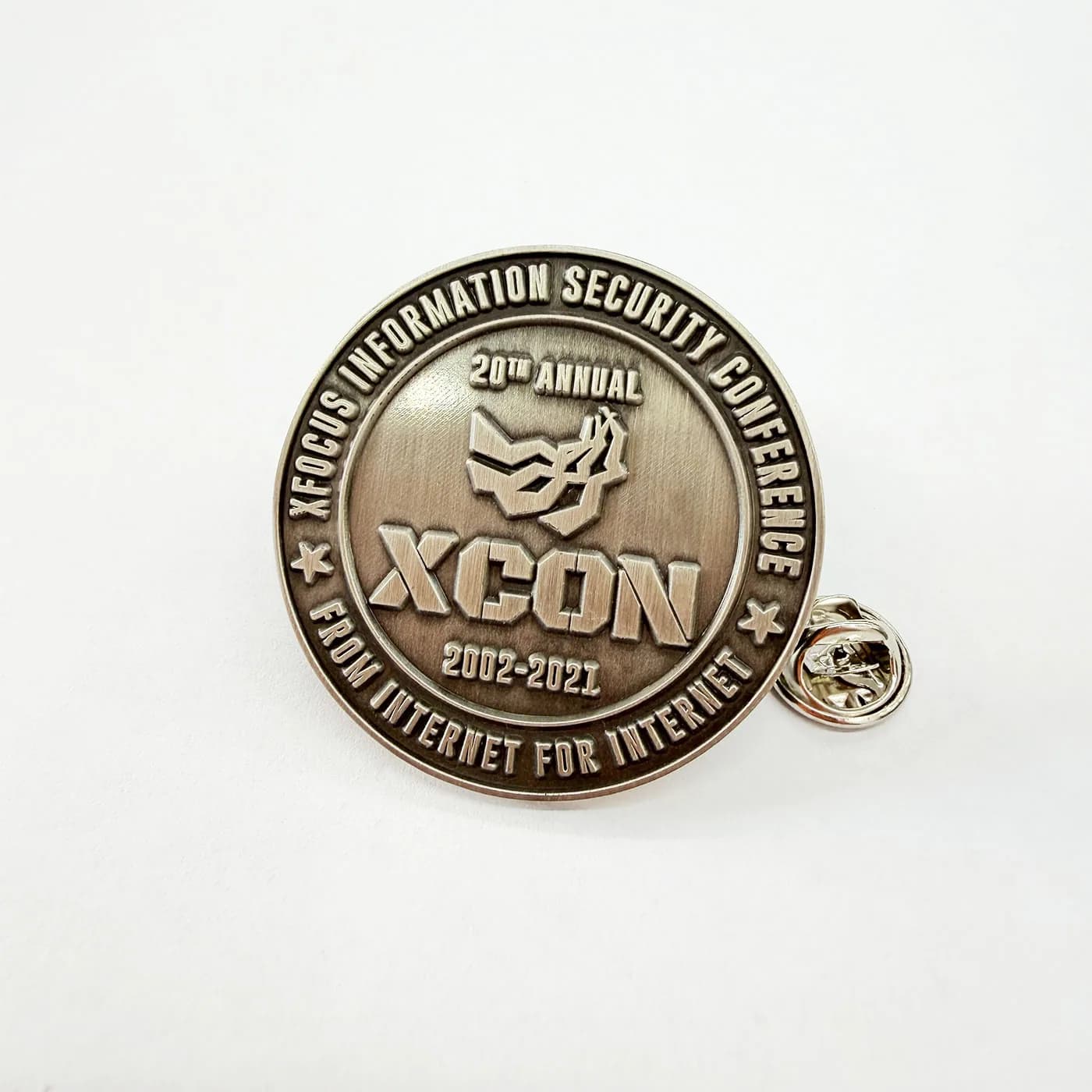
Pure Copper Stamped pins
- Material
- Copper
- Process
- Stamping, electroplating.
- Size
- 40mm
The surface finish also needs to be considered. Enamel, painted colors, and electroplating create different appearances, and the right combination depends on the design.
The manufacturer will assess these requirements and determine the appropriate production approach.
Step 4: Make the Mold
Once the design and production plan are confirmed, the manufacturer prepares the mold.
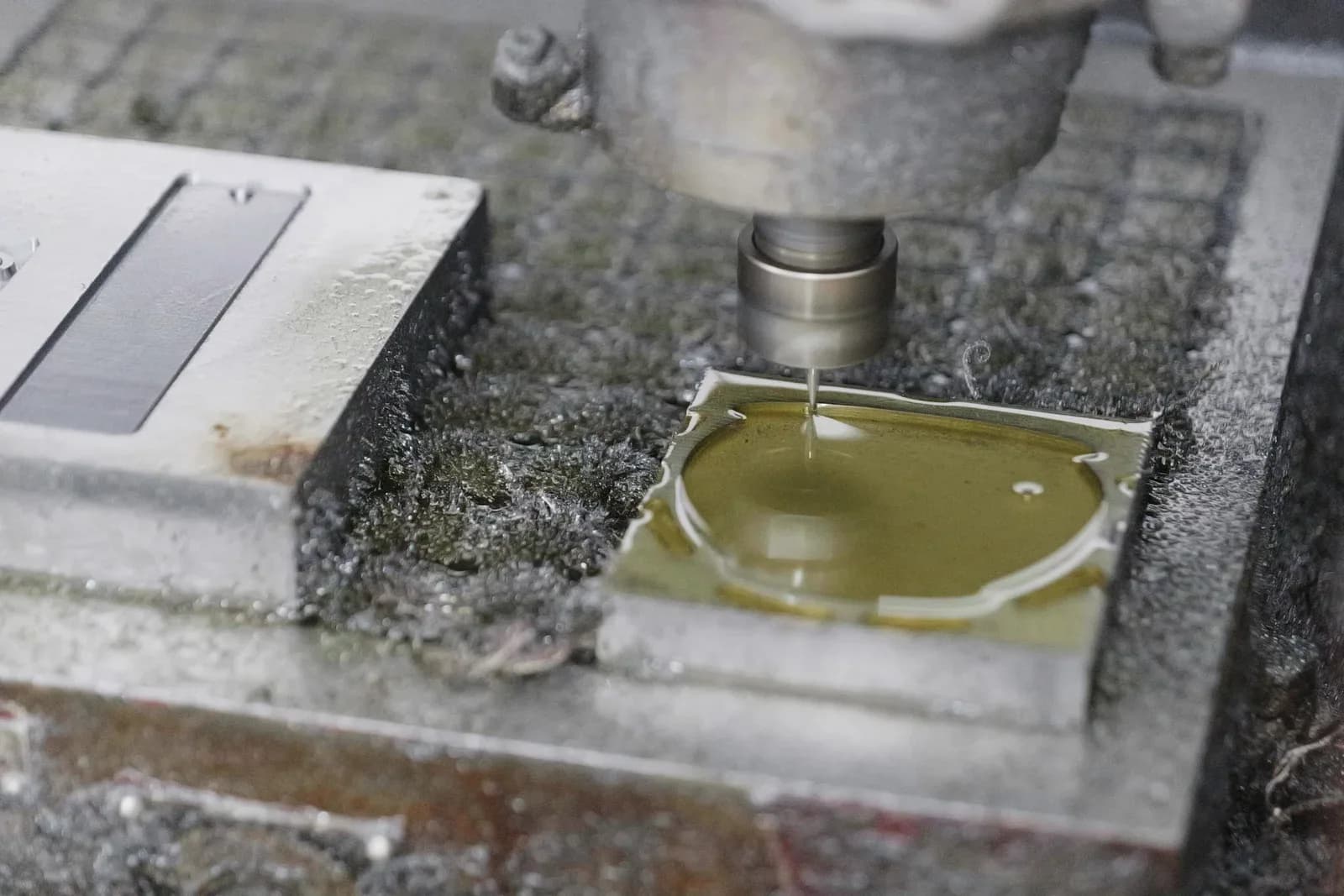
For custom metal pins, the mold determines the shape and structure of the metal piece. Its design must account for the intended dimensions, raised or recessed details, and other structural features.
Different designs generally require separate molds. This is also why the number of designs in an order can have a significant impact on the overall cost.
Mold making creates the foundation for the physical product.
Step 5: Produce and Approve a Sample
The manufacturer then makes a physical sample using the planned production processes.
The sample allows you to check the actual appearance rather than relying only on a design on screen.
You can review the size, thickness, shape, colors, plating, details, and pin attachment on the back.
If something needs adjustment, it can be discussed before bulk production begins.
Once the sample is approved, the project is ready to move into the next stage.
What Manufacturing Processes Are Used for Custom Pins?
The appearance of a metal pin depends on more than its design. The manufacturing and finishing processes also play an important role.
Here are some of the common processes used to produce custom metal pins.
Metal Forming Methods
Die Casting
Die casting is commonly used for zinc alloy pins with raised details, three-dimensional shapes, or more complex structures.
Molten metal is injected into a mold to create the required shape. This process is suitable for designs that need depth, relief, or more detailed metal structures.
Stamping
Stamping uses a die to cut or press metal into the required shape.
It is often used for relatively flat pins with clear outlines and simpler structures. Depending on the design, additional processes can be used to create raised or recessed details.
Etching
Etching uses a chemical process to remove selected areas of metal and create patterns or details.
It can be suitable for certain fine lines, shallow designs, and relatively detailed patterns. The final appearance depends on the metal thickness and the etching requirements.
Polishing
After metal forming, polishing helps improve the surface of the product.
This is one of the processes that can make a noticeable difference to both the production cost and the finished appearance.
There are different levels of polishing. Basic polishing mainly removes burrs and obvious surface imperfections. It is suitable when the product only needs a standard surface finish.
Fine polishing, sometimes referred to as jewelry-grade polishing, involves more detailed surface treatment. It takes additional time and labor but can produce a smoother surface and a more refined reflective finish.
The difference is particularly noticeable on exposed metal areas and raised details. Two pins made using the same forming process can look quite different depending on the polishing standard.
This is why we don't consider polishing just a minor finishing step. It is part of what determines the final quality and cost of a metal pin.
Surface Finishing
Once the metal body has been formed and prepared, different surface treatments can be applied to achieve the desired appearance.
Electroplating
Electroplating adds a metal coating to the surface of the product, changing its color and appearance.
Common plating options include:
- Gold plating
- Silver plating
- Nickel plating
- Black nickel plating
- Antique-style finishes, such as antique bronze
However, choosing the same plating color doesn't necessarily mean two products will have the same finish quality.
The plating process has its own requirements, including the treatment conditions and the time needed to achieve the specified coating. When plating time is reduced without adjusting the process appropriately, the coating may not reach the required thickness or finish.
This can affect the appearance and durability of the finished product.
From a manufacturing perspective, this is one reason why two factories may quote different prices for pins that appear to use the same plating process. The difference may lie in the actual plating standard, not simply the name of the finish.
Coloring Processes
Coloring adds colored areas to the metal pin. Common options include:
- Painted Finish: Suitable for designs with clearly separated color areas.
- Soft Enamel: Creates recessed colored areas separated by raised metal lines.
- Hard Enamel: Produces a smooth, polished surface with a more even finish.
- UV Printing: Allows detailed graphics, gradients, and designs with multiple colors to be reproduced on the metal surface.
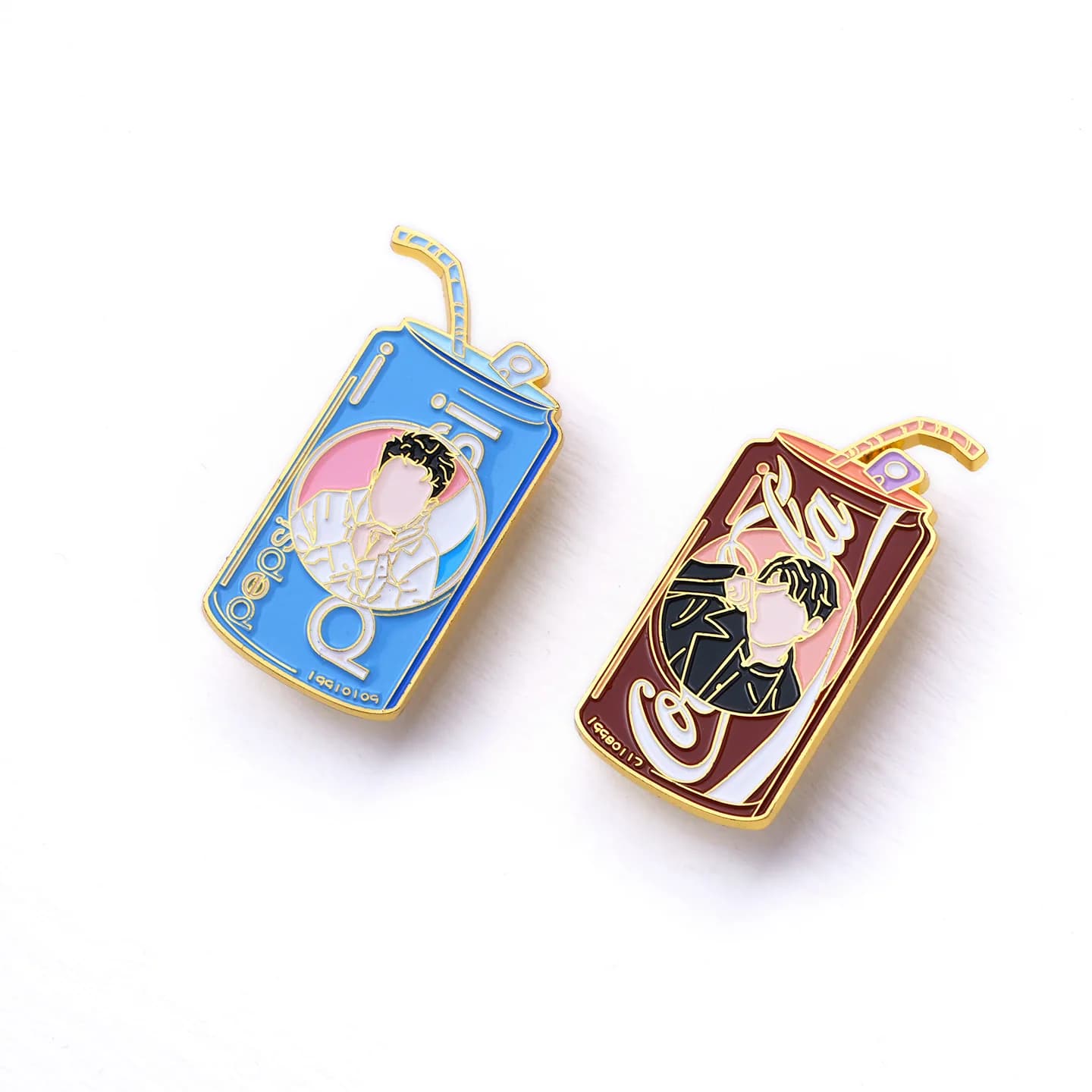
Celebrity Merchandise Enamel Pins
- Material
- Zinc Alloy
- Process
- Paint Finishing, Electroplating
- Size
- 18x30MM
Each method has its own characteristics. The best choice depends on the artwork, the desired appearance, and the product requirements.
Epoxy Coating
Epoxy coating adds a transparent protective layer over the printed or colored surface. It can create a glossy appearance and provide additional surface protection.
Not every pin needs every finishing process. Some designs may only require plating, while others combine metal finishes and coloring techniques to achieve the desired result.
Why Can Two Similar Custom Pins Have Different Prices?
From our manufacturing experience, the production method alone doesn't explain the full cost of a metal pin.
Even when two products use the same material, mold structure, and named finishing processes, their actual production standards may differ.
For example, one product may receive basic polishing, while another requires fine, jewelry-grade polishing. One may use a standard plating process, while another requires more time and a specified coating thickness.
These differences affect labor, processing time, and material costs. They also affect how the finished pin looks and feels.
So when comparing quotations for custom pins, it is worth looking beyond the process names. The actual finishing requirements matter just as much.
How Do Custom Pins Go from Sample to Bulk Production?
Approving a sample is an important milestone, but there are still several things to confirm before a bulk order begins.
Sample Approval
Before production moves forward, check that the sample matches your expectations.
Pay particular attention to:
- Overall shape and dimensions.
- Metal thickness and structural details.
- Color accuracy and surface finish.
- Plating color and finish quality.
- Polishing standard.
- Pin attachment and back structure.
- Overall workmanship.
It is also important to confirm the finishing requirements, not just the appearance of the sample. If the approved product requires fine polishing or a particular plating standard, these requirements should be included in the production specifications.
The approved sample and its confirmed specifications serve as the reference for bulk manufacturing.
Bulk Manufacturing
After sample approval, the manufacturer can arrange bulk production according to the confirmed specifications.
The production team follows the approved design, mold, materials, and finishing requirements to manufacture the order.
For orders with multiple designs, each product needs to follow its own confirmed specifications and production arrangements.
For larger orders, production planning also needs to account for the required quantity, manufacturing capacity, and delivery schedule.
Quality Inspection and Packaging
Before shipment, finished pins go through quality checks.
The inspection may include checking the product appearance, plating, polishing, coloring, structural details, and pin attachments.
Once inspection is complete, the products are packed according to the order requirements and prepared for delivery.
Ready to Get Your Custom Pins Made?
Getting custom pins made doesn't have to be complicated. The process starts with understanding what you want to create and choosing a production method that fits your project.
Whether you're developing branded lapel pins, promotional merchandise, event souvenirs, or retail products, the right manufacturer can help turn your design into a finished metal product.
At Anxin Metal Crafts, we manufacture custom metal pins and other metal products, including fridge magnets, keychains, medals, and commemorative coins.
We can also assist with original design development, manufacturing process selection, mold making, sampling, and bulk production.
If you're planning a custom pin project, you can share your idea, reference images, or existing design with us. Let us know how many designs you need and the quantity for each one. We'll help you explore the production options and find a suitable way to bring your project to life.